

 Quick Search


|
6 Chem. Lachapelle |
Quebec Tourism Region : Outaouais
English Version
Origin and meaning
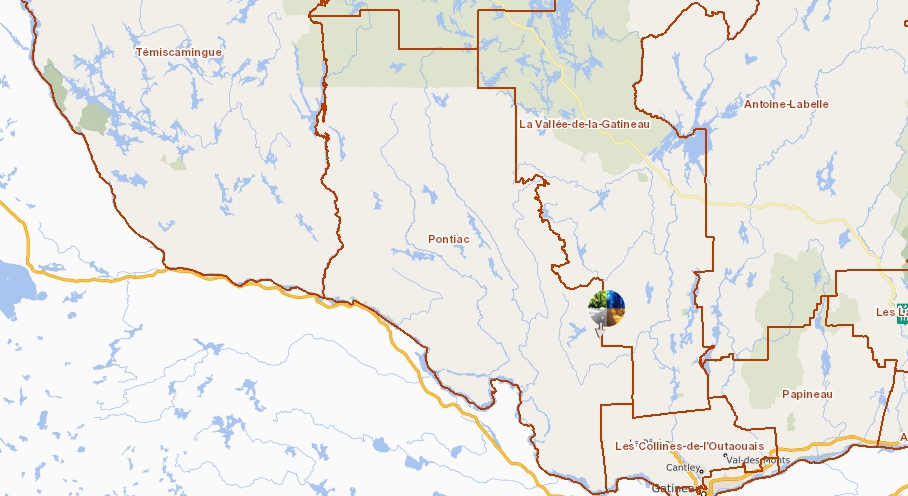
Located about 50 km southwest of Maniwaki, this uninhabited township in the Outaouais recalls the name of a region in central-eastern France, between Nivernais and Franche-Comté. Burgundy, once the land of the Burgundians, formed a kingdom during the Merovingians, then became an important duchy in the 9th century and finally a province that Louis XI managed to reunite with the French crown in 1477.
Until 1759, it sent about 130 immigrants to New France. Burgundy is famous for the variety of its landscapes and for its gastronomy, particularly for its wines, which were known in New France in the 17th century. Its capital is Dijon. The name of the township appears for the first time on the map of Quebec in 1956. Proclamation: 1966.
Sources
Names and places of Quebec, work of the Commission de toponymie published in 1994 and 1996 in the form of a printed illustrated dictionary, and in that of a CD-ROM produced by the company Micro-Intel, in 1997, from this dictionary.
Version Française
Origine et signification
Situé à 50 km environ au sud-ouest de Maniwaki, ce canton inhabité de l'Outaouais rappelle le nom d'une région du Centre-Est de la France, entre le Nivernais et la Franche-Comté. La Bourgogne, autrefois pays des Burgondes, a formé un royaume au temps des Mérovingiens, puis est devenue un duché important au IXe siècle et finalement une province que Louis XI parvint à réunir à la couronne de France en 1477.
Jusqu'en 1759, elle envoya environ 130 immigrants en Nouvelle-France. La Bourgogne est célèbre pour la variété de ses paysages et pour sa gastronomie, notamment pour ses vins qui étaient connus en Nouvelle-France au XVIIe siècle. Sa capitale est Dijon. Le nom du canton se retrouve pour la première fois sur la carte du Québec en 1956. Proclamation : 1966.
Sources
Noms et lieux du Québec, ouvrage de la Commission de toponymie paru en 1994 et 1996 sous la forme d'un dictionnaire illustré imprimé, et sous celle d'un cédérom réalisé par la société Micro-Intel, en 1997, à partir de ce dictionnaire.
Address of this page: http://qc.ruralroutes.com/27931.html