

 Quick Search


|
550, rue Notre-Dame |
Quebec Tourism Region : Outaouais
English Version
Origin and meaning
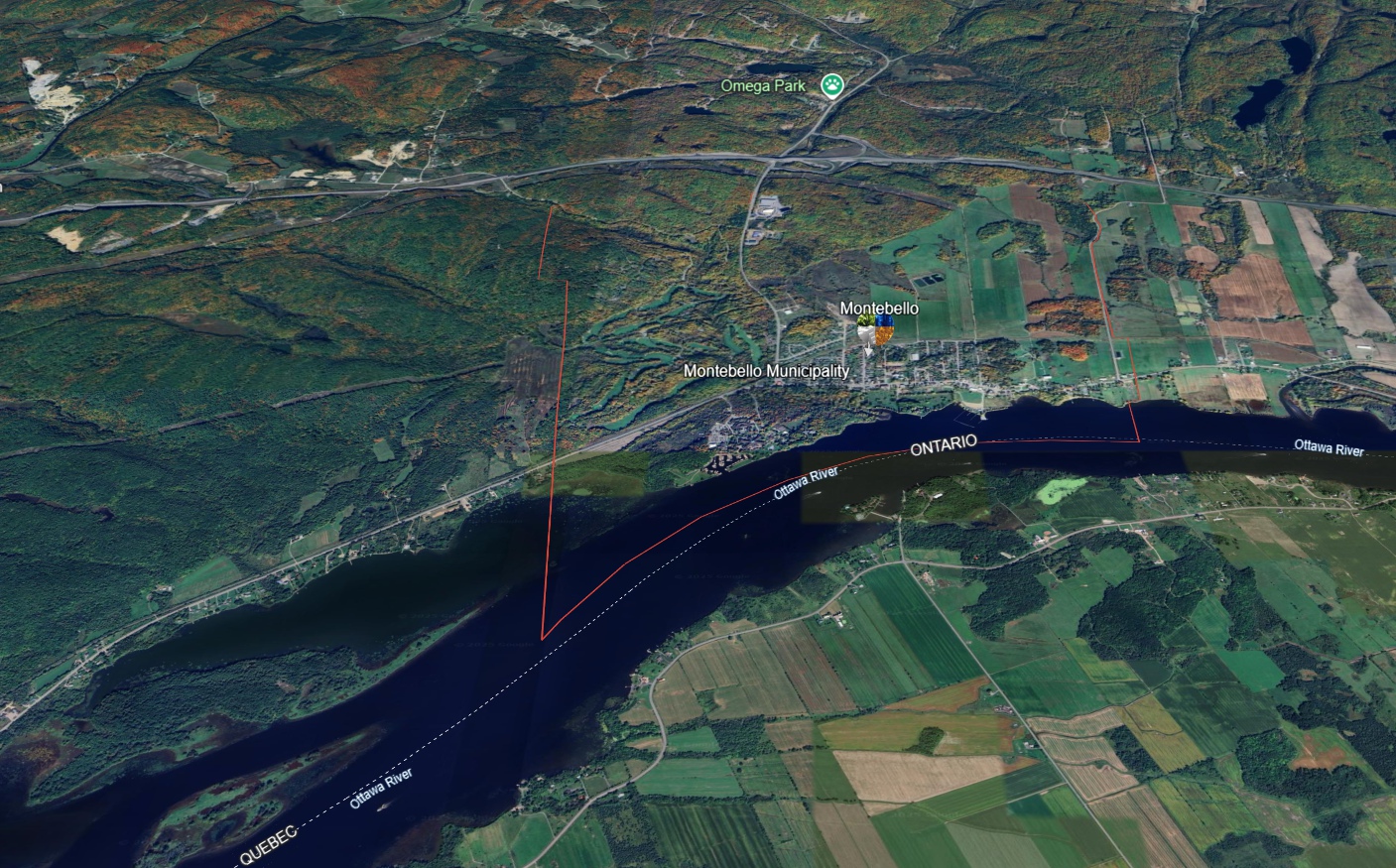
Three explanations have been put forward as to why this name was given to a municipality located on the north bank of the Ottawa River, 51 km west of Lachute. According to the first, the name dates back to 1852 and was given by Louis-Joseph Papineau (1786-1871), then owner of the seigneury of La Petite-Nation, which he had acquired in May 1818 from his father, Joseph, who had owned it since 1801. The latter had acquired it from the Séminaire de Québec. Louis-Joseph Papineau thus wanted to pay homage to Napoléon-Auguste Lannes, Duke of Montebello (1801-1874), French diplomat and Minister of Foreign Affairs in 1839; he had known him during his exile in France from 1839 to 1845. In his correspondence, Papineau uses the disjunct form Monte-Bello, just as for the name of the local post office opened in May 1855.
The second hypothesis, little accredited, is based on the similarity of the landscape of Montebello with that of the commune of the same name in Lombardy, near Pavia.
A third, more likely hypothesis has been developed recently. Montebello would be a name created from the Latinization of the words "mont" (the manor is built on a promontory) and "beau". Note that from March 1852, Louis-Joseph-Papineau used the name Montebello in his exchanges with his "close circle of friends".
First known as Petite-Nation, from the name of an Algonquin people who formerly lived in these parts, the municipality was identified as Montebello from 1878, on an official map. Detached from the parish municipality of Notre-Dame-de-Bon-Secours-de-la-Petite-Nation (1855), which took over from the municipality of La Petite-Nation (1845), abolished in 1847, Montebello takes its original name from that of the seigneury of La Petite-Nation, granted in 1674 to Monseigneur de Laval and of which Joseph Papineau would become the owner.
In 2003, the municipality of the village of Montebello became the municipality of Montebello. The main attraction of the place lies in the magnificent hotel known as Château Montebello. This architectural monument is said to be the largest log construction in the world, in the center of vast green spaces laid out as promenades and golf courses. People from various governments and different backgrounds regularly stay and meet there. On the same site, we find the Louis-Joseph-Papineau manor, which the leader of the 1837 Uprising had built from 1846 to 1859 and which served as his retreat.
Sources
SICOTTE, Anne-Marie, Papineau. For love above all. Louis-Joseph-Papineau Historical Society, carte blanche, 2021, p. 192-193.
Version Française
Origine et signification
Trois explications ont été avancées quant au motif d'attribution de ce nom à une municipalité sise sur la rive nord de la rivière des Outaouais, à 51 km à l'ouest de Lachute. Suivant la première, la dénomination remonte à 1852 et a été attribuée par Louis-Joseph Papineau (1786-1871), alors propriétaire de la seigneurie de La Petite-Nation qu’il avait acquise en mai 1818 de son père, Joseph, lequel en était propriétaire depuis 1801. Ce dernier l’avait acquise du Séminaire de Québec. Louis-Joseph Papineau aurait ainsi voulu rendre hommage à Napoléon-Auguste Lannes, duc de Montebello (1801-1874), diplomate français et ministre des Affaires étrangères en 1839; il l’avait connu lors de son exil en France de 1839 à 1845. Dans sa correspondance, Papineau utilise la forme disjointe Monte-Bello, tout comme pour le nom du bureau de poste local ouvert en mai 1855.
La deuxième hypothèse, peu accréditée, repose sur la similitude du paysage de Montebello avec celui de la commune du même nom en Lombardie, près de Pavie.
Une troisième hypothèse plus vraisemblable a été développée récemment. Montebello serait un nom créé à partir de la latinisation des mots mont (le manoir est construit sur un promontoire) et beau. Notons qu’à partir de mars 1852, Louis-Joseph-Papineau utilisait le nom Montebello dans ses échanges avec son « cercle étroit d’amis ».
D'abord connue sous l'appellation Petite-Nation, du nom d'un peuple algonquin qui a vécu anciennement dans ces parages, la municipalité a été identifiée sous celle de Montebello à compter de 1878, sur un plan officiel. Détachée de la municipalité de la paroisse de Notre-Dame-de-Bon-Secours-de-la-Petite-Nation (1855), laquelle reprenait la suite de la municipalité de la Petite-Nation (1845), abolie en 1847, Montebello tire sa dénomination originelle de celle de la seigneurie de La Petite-Nation, concédée en 1674 à monseigneur de Laval et dont Joseph Papineau deviendra propriétaire.
En 2003, la municipalité du village de Montebello est devenue la municipalité de Montebello. L'attrait principal du lieu réside dans le magnifique hôtel connu sous le nom de Château Montebello. Ce monument architectural constituerait la plus vaste construction en bois rond au monde, au centre de vastes espaces verts aménagés en promenades et en terrains de golf. Des gens provenant des divers gouvernements et de différents milieux y séjournent régulièrement et s'y réunissent. On retrouve, sur le même site, le manoir Louis-Joseph-Papineau que le chef de l'Insurrection de 1837 fait construire de 1846 à 1859 et qui lui servira de lieu de retraite.
Sources
SICOTTE, Anne-Marie, Papineau. Par amour avant tout. Société historique Louis-Joseph-Papineau, carte blanche, 2021, p. 192-193.
Address of this page: http://qc.ruralroutes.com/28152.html